Artificial Grass Installation in Surprise, AZ

Click to Call623-254-4115

Artificial Grass Installation for Surprise Yards

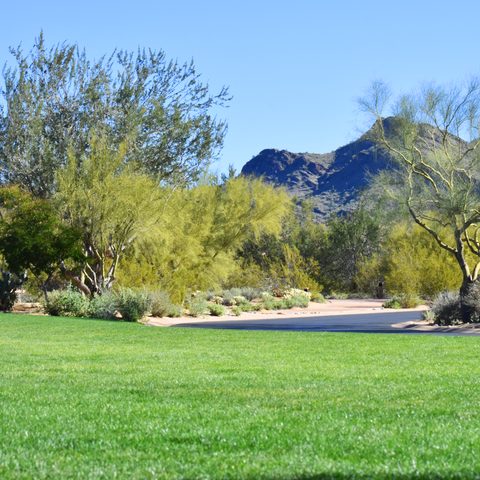
Bright green grass lawn in front of desert trees and a rocky peak

Maybe it’s a Bermuda lawn that drinks all summer and goes brown every winter, a bare side yard worn down by the dog, or a backyard of rock that never felt finished. Surprise Turf Works handles artificial grass installation for homes in Surprise and nearby communities: backyards, front yards, dog runs, putting greens, and replacing turf that has worn out.

The desert sets the terms here. The ground can turn hard a few inches down, the summer sun sits on the yard for months, and a monsoon storm can dump a lot of water at once. Each of those shapes the base, the slope and the product before any turf is unrolled.

For a price, call or send the form. Someone comes to the house, walks the space with you and measures it, and the quote is free. Product and layout get worked out together, so there’s no need to have either decided first.

Each kind of project has its own page: backyard turf, artificial grass for dogs, putting green installation and turf replacement. Still torn between turf, rock and a real lawn? The comparison a little further down lays them side by side.

Call 623-254-4115 or use the form. A rough size and a word about what covers the ground now is plenty to start.

Free Artificial Grass Quote

Free quote. No obligation.

What do you need?

Heat, Water and HOAs in Surprise


A few facts about this corner of the West Valley change how any artificial grass installation here is planned and used.

Summer heat

The National Weather Service’s Phoenix records, the usual yardstick for the Valley, show an average of 111 days a year at 100 degrees or above and 21 days at 110 or above, going by the 1991 to 2020 normals. In 2024 Phoenix logged 70 days of 110 or hotter, the most on record. Surprise sits in the same desert, so plan the yard for that kind of summer.

Artificial grass gets hot in direct afternoon sun, and on the hottest days it can be too hot to touch for long. Shade is what makes the difference: a tree, a patio cover or a shade sail over the part where kids and pets play.

Monsoon storms and dust

The Arizona Department of Water Resources notes that in 2008 the National Weather Service fixed June 15 through September 30 as the region’s monsoon season. Those months bring thunderstorms with lightning, strong wind and heavy rain, and now and then a wall of dust. On August 25, 2025, the weather service logged reports of 50 to 65 mph winds as a dust storm moved over the Phoenix metro.

Dust is the part a turf owner notices most. It settles into the blades and the infill and dulls the color until it’s rinsed out. The rain matters too: it has to pass down through the backing and the base and then away from the house, and the slope built into the base decides where it goes.

What may be under the yard

Water that drains through turf has to keep moving once it reaches the soil, and in some yards a pale, hard layer a little way down won’t let it. That layer is often caliche, soil bound together by calcium carbonate. The University of Arizona’s extension service lists it as a common problem in southern Arizona soils.

It can be crumbly or close to rock, and it runs from a few inches to several feet thick, so no map tells you what a given lot has. Where it shows up near the surface, the slope of the base has to move water that the soil won’t take, and that changes how the ground is prepared.

HOAs and landscape rules

A lot of Surprise neighborhoods have a homeowners association. Sun City Grand and Surprise Farms each have a community association, for example, and the city keeps a list of HOA contacts through its neighborhood services division and offers classes for HOA board members, management staff and homeowners.

If your home is in one, your association’s landscape guidelines and approval process are the place to start; ask what they say about turf before anything is ordered, front yard and back. Sun City West and Sun City have no city government, so there the community association’s deed restrictions are the thing to check.

Watering what stays planted

Turf rarely covers a whole yard. The trees, shrubs and beds around it still need water, usually by drip. The City of Surprise posts landscape watering guidelines and has a xeriscape demonstration garden, and both are useful when planning the planted parts of a yard that is getting turf.
Turf, Gravel or a Living Lawn for a Desert Yard


Most yards around here end up with some mix of the three. Here is a plain look at each one.

OptionWhat to weigh
Bermuda or other living grassThe softest of the three and the kindest underfoot on a summer evening. It needs regular water, mowing and feeding, and Bermuda goes brown in winter unless it is overseeded.
Gravel and desert plantsSimple to look after once the plants are established, and it suits the climate. Rock soaks up heat too and is rough on bare feet and paws, and weeds still find their way up.
Artificial grassGreen all year with no mowing and no regular watering. It gets hot in full sun, wants rinsing and brushing now and then, and dog areas need more care. It wears out eventually and has to be replaced.

Plenty of owners split it up: turf where people and dogs actually spend time, rock and desert plants along the edges and out front, and shade trees where they help most. The free quote can cover more than one layout.

One thing that gets overlooked is that turf does little about the heat around a house, while a tree does a lot. If there’s room, leave space for one, even in the middle of a turf area with a ring of rock around the trunk.

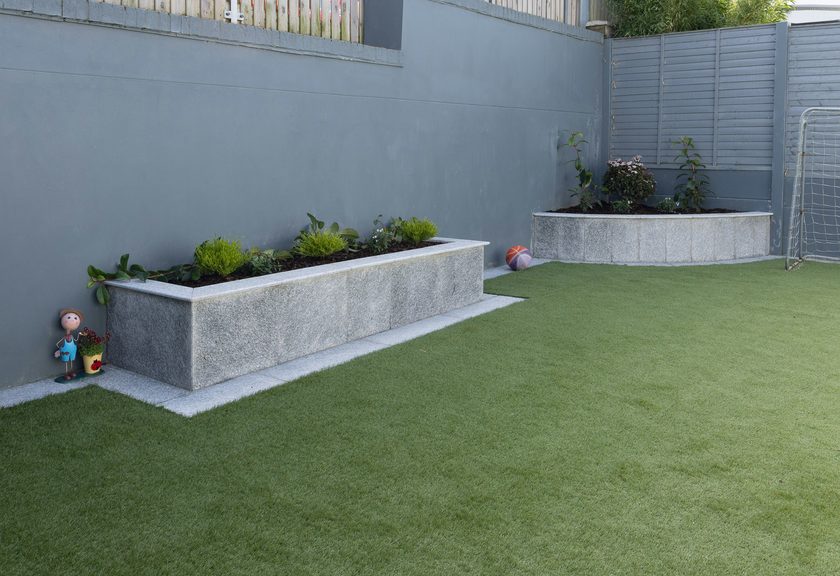
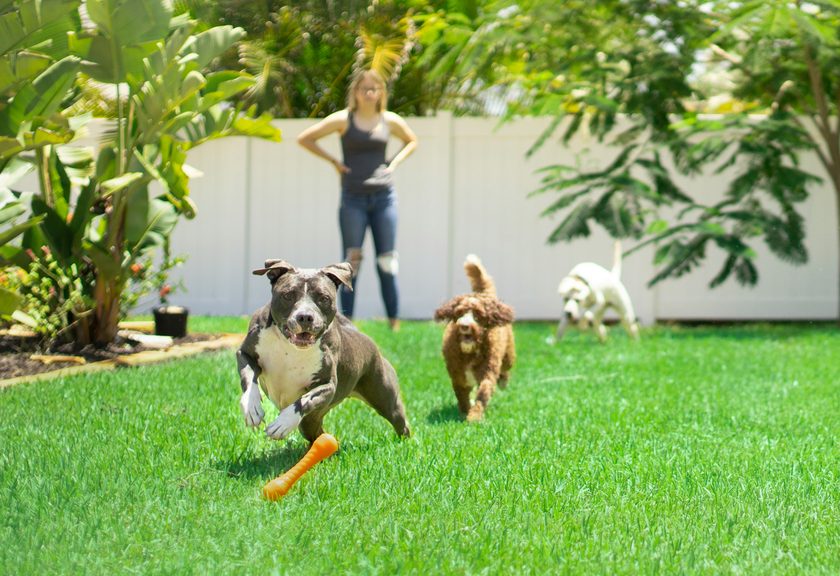
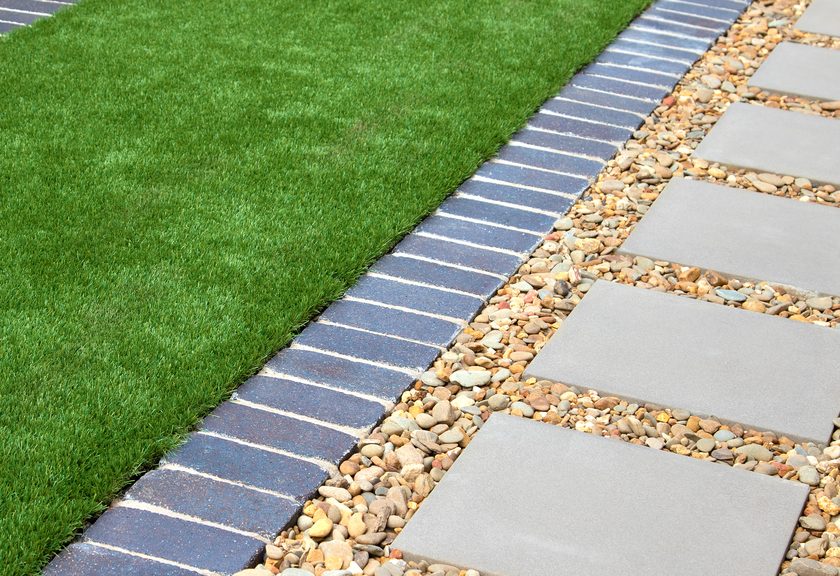
Artificial grass edged with dark brick beside pebbles and concrete stepping padsSmall walled yard with artificial grass, raised planters and a play goalThree dogs running across a green backyard while a woman watches

Backyard Turf Behind the House


For most households the backyard is where turf gets the most use. It gives kids a place to play, gives the patio chairs something green to face, and doesn’t need the sprinklers running every morning.

Start with the layout: where does the patio stop, where do people walk, where does shade fall in the afternoon, and what happens to the trees and planters already there? After that come the choices about the turf itself: blade height, color, how full it feels and how it takes foot traffic. The backyard turf page goes through those options and how a yard is generally built up underneath.

Turf for Dogs and Dog Runs


A living lawn doesn’t stand much of a chance against a dog or two. Paths get worn along the wall, holes appear, and yellow spots follow the dog around the yard. Artificial grass for dogs takes care of the mud and the bare patches, but it brings its own job: getting urine to drain through and keeping smells down in the heat.

That is why pet areas are usually built a bit differently, with a backing that lets liquid pass, a base that drains, and an infill picked with pets in mind. Rinsing still matters, more so in summer. The artificial grass for dogs page covers it in more detail.

Putting Greens Out Back


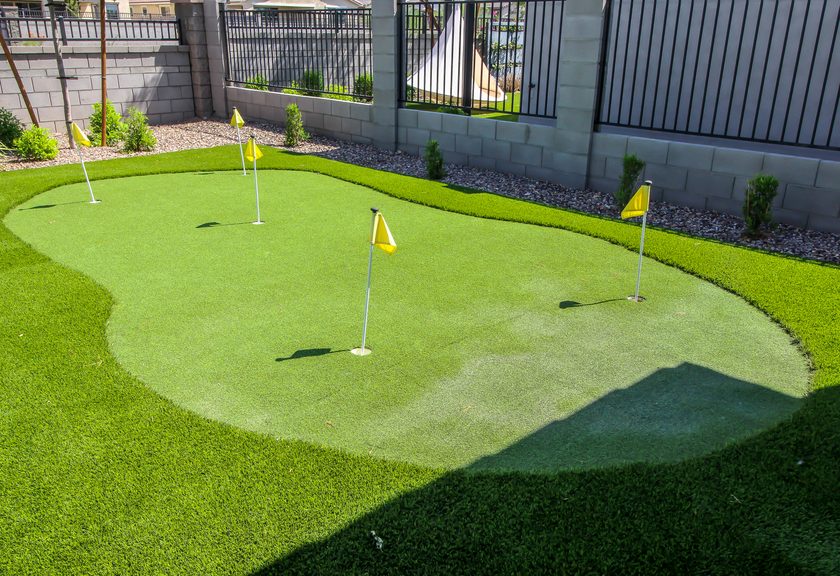
A green out back can be a single cup in a corner or a shaped green with several holes and some break to read. It needs a firmer, smoother base than a lawn area, since a small dip nobody would feel underfoot is enough to pull a putt off line. The putting surface is a shorter, tighter turf, often with longer fringe turf around it.

Before settling on a size, think about the shots you want to practice. Chipping onto the green from the yard takes a longer approach and a surface that holds a ball. The putting green installation page covers cups, contours and how the base is shaped.

Replacing Old Turf or a Thirsty Lawn


This covers two kinds of work. One is pulling up artificial grass that has gone flat, faded, split at the seams or started to smell of dogs, and putting down something new. The other is taking out a living lawn, often Bermuda, and laying turf in its place.

Either way, what sits under the surface decides how big the job is. An old turf base might be usable again after regrading and compacting, or it might not. A lawn has roots, sprinkler lines and sometimes soft spots to deal with first. The turf replacement page explains both.

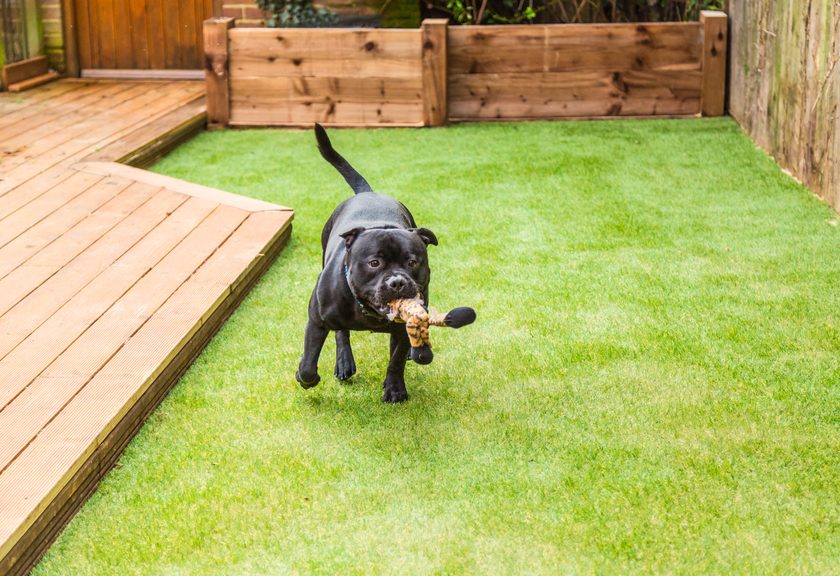
Black dog carrying a toy across artificial grass beside a wood deckBackyard putting green with yellow flags inside a block and iron fenceClose-up of short green grass blades

What Shapes the Cost of Artificial Grass Installation


Two yards with the same square footage can land a long way apart on price, which is why no numbers appear here. What usually separates them:

Small areas are not always small jobs. A narrow side yard can need as much base work per foot as an open backyard, and sometimes more carrying.

Before You Call: Turf Questions


Does artificial grass get too hot to use in a Surprise summer?

Yes. In direct sun it gets hot, and on a July afternoon it can be too hot for bare feet or paws. Mornings are less hot, but a summer evening here can still sit above 100 degrees, so feel the surface before anyone heads out on it.

Will my HOA let me put turf in the front yard?

Front yards draw the most attention from associations because they face the street. Get the association’s answer in hand before turf is ordered, and find out what the request should include.

Can turf be laid around the trees I already have?

Usually, yes. The turf is cut to fit around each trunk, and many owners leave a ring of rock or mulch at the base. The tree still needs water, so the drip line feeding it is normally kept or rerouted. Point out every tree you plan to keep when we visit.

What happens to the sprinklers in my lawn?

Heads inside the new turf area are usually capped. Lines that water nearby beds or trees are kept, or switched over to drip. It helps to know where the valves and main lines run, so share whatever you know about the system.

Does turf need watering at all?

Not to stay green. It does want a rinse now and then to wash off dust, pollen and pet urine, and more often in summer or after a storm has blown dirt across it.

Can turf go in during the hot months?

It can. Turf is laid all year in the Valley, and warm weather helps it relax and lie flat once it is unrolled. Summer work generally starts early in the morning, before the worst of the afternoon heat.

Do you cover El Mirage or the Sun Cities?

Yes. Along with Surprise itself, the service area takes in El Mirage, Sun City West, Sun City, Peoria and Waddell. If you’re unsure whether your address is included, call 623-254-4115 and ask.

From First Visit to Finished Turf


Most artificial grass installation jobs follow roughly this order.

Measuring and talking it through

We come out and measure, look at the slope, the gate, the soil and whatever is growing there now, and talk through the layout with you. The free quote is built from what that visit turns up.

Digging out

Existing grass, rock or old turf comes out, and the soil is dug down a few inches so the finished turf sits at the right height against patios, walks and borders. Sprinkler heads in the area are capped or moved.

Rock base and grading

Crushed rock or decomposed granite is spread, shaped so water runs away from the house, and compacted firm. The finished turf takes on the shape of whatever is under it, so this is the step that deserves the most care.

Rolling out and joining the pieces

The turf is rolled out with all the blades leaning one way, cut to fit, and joined at the seams with tape and adhesive. The edges are trimmed and fastened down along every border.

Sand and a final brush

Infill, usually sand or another granular fill, is spread over the turf and worked down between the blades. The added weight keeps the turf lying flat, the fibers have something to lean on, and the lower part of the backing sits out of direct sun. A last brushing lifts the blades.

Where in the West Valley We Go


We handle artificial grass installation across Surprise, from the streets of the original townsite south of Bell Road out to master-planned communities such as Marley Park, Surprise Farms and Sun City Grand.

Beyond the city line the area takes in El Mirage, Sun City West, Sun City, Peoria and Waddell. Sun City West is unincorporated and is bordered on the north, west and south by Surprise, and Sun City is unincorporated as well.

If your street sits near the edge of all that, the number to try is 623-254-4115.

Click to Call623-254-4115
Click to Call: 623-254-4115